Legalization and Registration
How to Check Whether a Mississauga Basement Is Registered
A practical workflow for checking the City resource, distinguishing the records and following up when the answer is incomplete.
To check a Mississauga basement’s registration, begin with the City’s official second-units registry resource, match the property carefully, and follow up with the City when the result or record is unclear. Keep registration information alongside permits, drawings and inspection records. A rental listing, finished interior or separate door is not a substitute for those records.
Start with the official source and the exact property.
When someone describes a basement as “legal,” ask what documentation supports that description. The useful starting point is the property’s actual records, rather than how the space looks or how long it has been occupied. This matters whether you own the house already or are reviewing information supplied during a purchase.
Open the City of Mississauga’s second-units registry resource. Use the current version provided there and record when you checked it. Match the address carefully, including the street name and any address details needed to distinguish the property. Do not treat a nearby or similarly named address as a match.
If you are searching a document, try the street name and then inspect the relevant address entries. If you cannot locate the property, record the search terms you used and take the question to the City. A failed search may leave several possibilities open; it should not be turned into a confident conclusion without clarification.
Write down exactly what you found.
Create a short note containing the property address, the date checked, the official resource used and the result. Save the relevant record or link with the rest of the property file. If a seller, previous owner or provider supplied a separate document, keep that document and identify its source rather than merging it into your own recollection.
Use neutral language. “The address appears in the City resource checked on this date” is more precise than a broad claim that every part of the current basement has been verified. If the layout has changed, the relationship between the record and the current work still needs to be understood.
A registry entry, permit and inspection record serve different purposes.
One of the most common sources of confusion is treating every official-looking paper as proof of the same thing. A file may contain an application receipt, a permit, a plan revision, an inspection note and registration information. Read the title, reference number, date and scope of each item before deciding what question it answers.
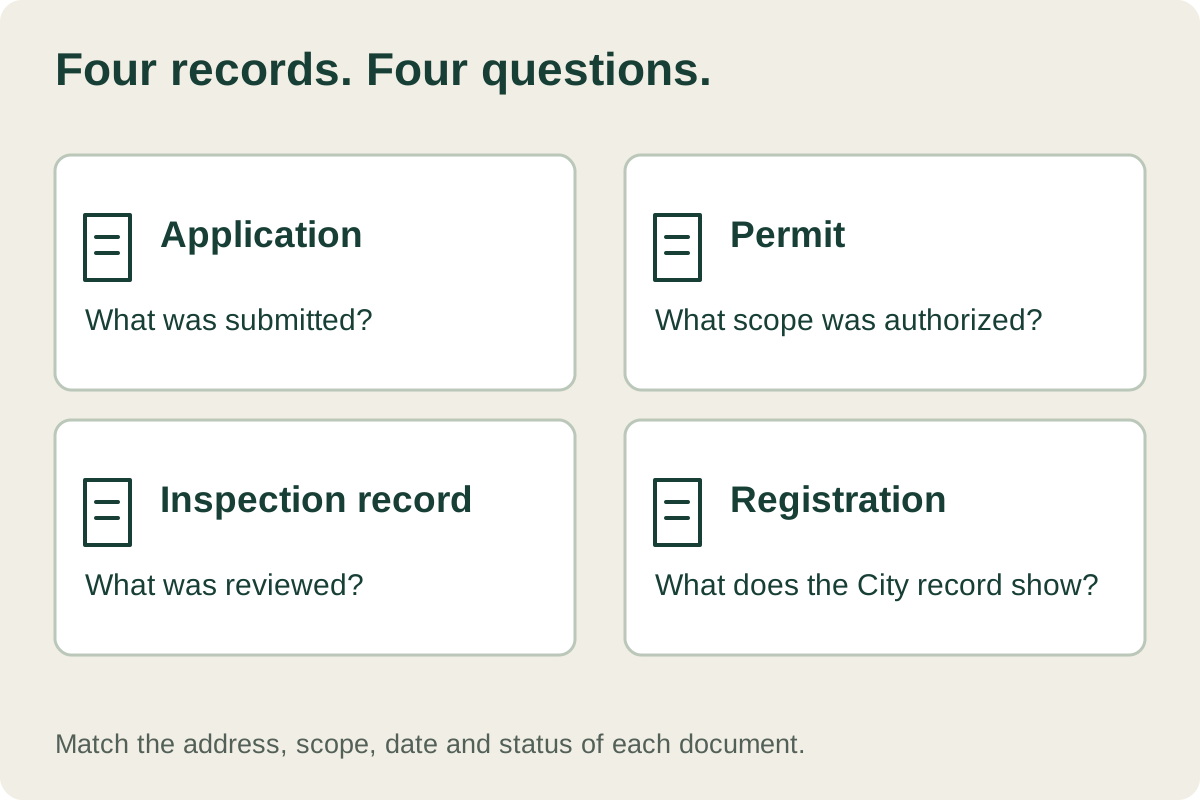
| Record | Question it helps answer | Follow-up to consider |
|---|---|---|
| Application reference | What was submitted and under which reference? | What was the outcome of the application? |
| Permit and related drawings | What scope was authorized? | Which drawing version applies, and did the work change? |
| Inspection correspondence | What work or stage was reviewed? | Were there outstanding items or later inspections? |
| Registration information | What does the City’s registration record establish? | Does the record match the property and the current enquiry? |
| Trade documentation | What evidence exists for the relevant trade work? | Which authority or provider can explain any gaps? |
The table is an organizing tool, not a legal interpretation of a document. If the meaning or status of a City record is uncertain, ask the City to explain it. If the question concerns technical work, involve the appropriate qualified designer or trade professional.
If the address is missing, unclear or inconsistent, prepare a focused question.
A useful follow-up gives the City enough information to understand what you are trying to verify. State the address, the resource and date checked, and the permit or registration reference you have, if any. Explain the specific uncertainty: an address not found, a different description, a missing closeout record or a question about later alterations.
Avoid asking only, “Is this basement legal?” That wording can bundle together registration, zoning, approved construction, inspection status and present conditions. A narrower question makes it easier to identify which record or department can resolve the issue.
- “I found this permit reference. Which approved scope and inspection records relate to it?”
- “I could not locate this address in the current registry resource. What is the appropriate way to clarify its registration status?”
- “The current layout appears different from the drawing supplied. What record should be reviewed next?”
- “This correspondence lists an outstanding item. Where can I confirm whether it was subsequently resolved?”
These are examples of questions you can adapt. They do not assume the answer or authorize continued use of a space while a concern remains unresolved.
Compare the records with the current basement.
Documents become more useful when the actual arrangement is understood. Note the rooms, kitchen, bathroom, laundry and access route currently present. Identify any change you know occurred after the date of an available drawing. Do not open walls or disturb work simply to create your own proof; ask a qualified provider what assessment is appropriate.
A room photograph can help explain the visible layout, but it does not show concealed assemblies or establish dimensions reliably. Likewise, a contractor’s statement that a feature is “standard” does not explain how it relates to the property’s documentation. Keep observations, professional findings and official records as distinct parts of the file.
Build a small records folder before requesting a review.
You do not need a perfect historical archive. A clear list of what you have and what is missing is enough to make the first discussion more productive. Store the files with names that identify the document type and date, and keep original copies where possible.
- Property address and your contact details.
- Registry-check note, source and date.
- Available permit numbers and application references.
- Drawings, including revisions and any approval markings.
- Inspection correspondence and outstanding-item lists.
- Relevant electrical or other trade documentation supplied to you.
- A brief description of the current use and known later changes.
- A separate list of unanswered questions.
When sharing documents, avoid including unrelated financial, identification or tenant information. Ask the provider how to transmit the relevant files and who will review them.
Choose the service that matches the gap.
If the main uncertainty is the City record, clarify that record with the City. If the basement is finished but needs a coordinated review of records and conditions, start with existing-basement legalization planning. If a revised or new design package is needed, discuss drawings and permits.
The legal basement requirements guide explains the wider assessment topics. The project process shows how an assessment can lead to a defined corrective scope, inspections and handover. If you are ready to enquire, describe the records you have and the specific question you want the provider to help resolve.
Common record-check questions
If the address is listed, can I ignore later alterations?
No. Keep the registration information, but also establish how any later work relates to the relevant drawings, permits and inspection records.
If I cannot find the address, should I conclude it is unregistered?
Record the unsuccessful check and ask the City to clarify. Do not turn an incomplete search into a definitive property-status statement.
Is a real-estate listing enough evidence?
No. A listing describes a property for marketing purposes. Ask for the records behind any statement about a separate unit and verify the relevant official information.
Can I begin an enquiry with only a few documents?
Yes. Explain what you have, what is missing and the current basement use. That lets the provider define the appropriate assessment rather than assume a complete record exists.
When the status check turns into a submission task
If your next step is assembling the final paperwork, continue to the second-unit registration preparation guide. It covers missing sign-offs, ownership information and the distinction between a records search and a registration submission.
Sources and review
Reviewed September 17, 2026. This guide provides a records workflow, not a determination about an individual property.