What to Record When Your Basement Feels Damp
Turn scattered observations into a clear starting point for a moisture assessment and a better sequence for the renovation.
Read the guide: What to Record When Your Basement Feels DampMississauga project details
Understand where moisture comes from before covering the evidence. Connect drainage, openings, building services and finishing decisions.
Discuss moisture before renovationRecord the pattern, investigate the source and define the corrective work before covering walls or installing moisture-sensitive finishes. Rainwater, groundwater, plumbing leakage and condensation can create similar-looking symptoms. A dry day or a dehumidifier does not establish that the underlying issue has been resolved.
This guide helps place moisture work in a Mississauga renovation plan. For a simple observation log to bring to an assessment, read what to record when a basement feels damp. If there is active flooding, sewage or water near electrical equipment, keep clear of the affected area and obtain appropriate urgent help.
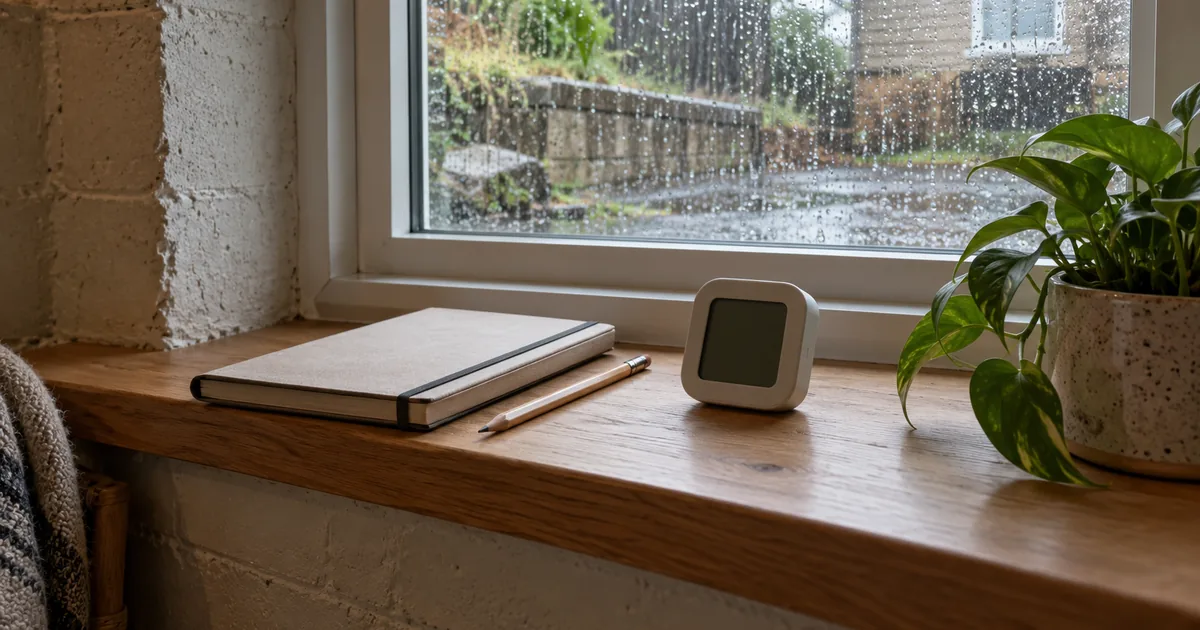
Identify where moisture appears: the wall-floor junction, around a window, at a plumbing fixture, on a cool surface or across a larger floor area. Record whether it follows rain, thawing snow, appliance use or a particular season. Keep previous repair records and note what changed afterward.
| Observation | Useful information to gather safely | Avoid assuming |
|---|---|---|
| Water near a window after rain | Timing, affected opening and exterior photographs from ground level | That replacing the window alone resolves the surrounding drainage |
| Dampness near a fixture | Which fixtures were used and where moisture first became visible | That it is definitely a foundation leak |
| Condensation on cool surfaces | Season, room use, humidity observations and ventilation conditions | That a waterproofing product addresses indoor moisture |
| Repeated floor or drain backup | Previous reports, repair history and the affected locations | That every backwater device protects the same system |
These patterns help organize the investigation; they are not a diagnostic test. A provider may need to examine more than one possible source before recommending work.
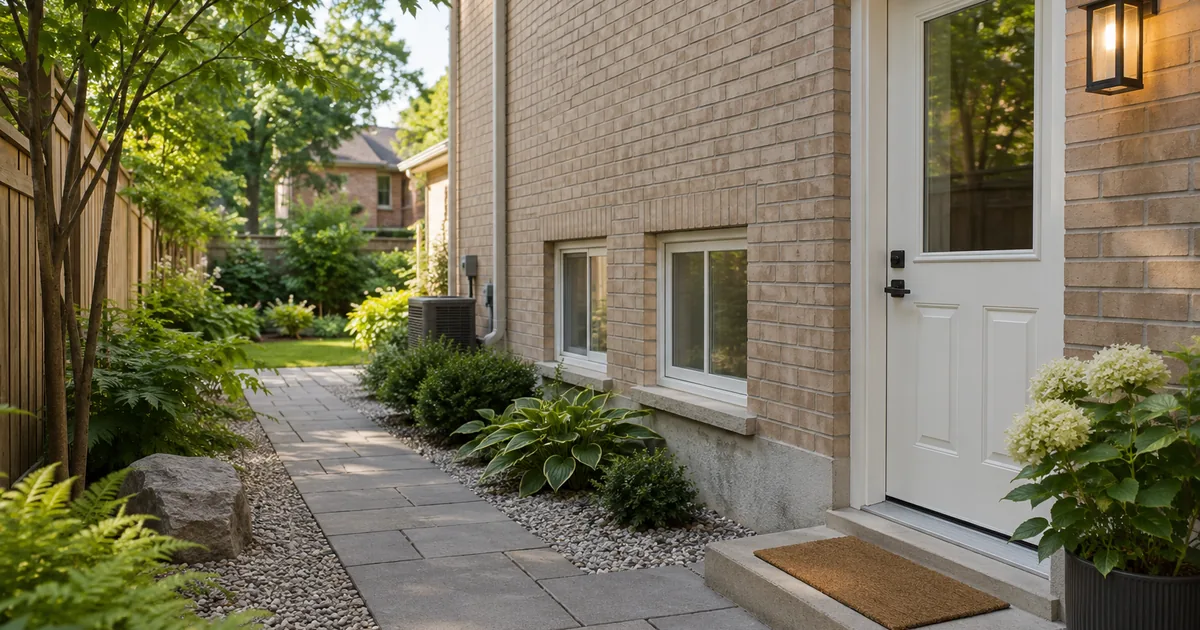
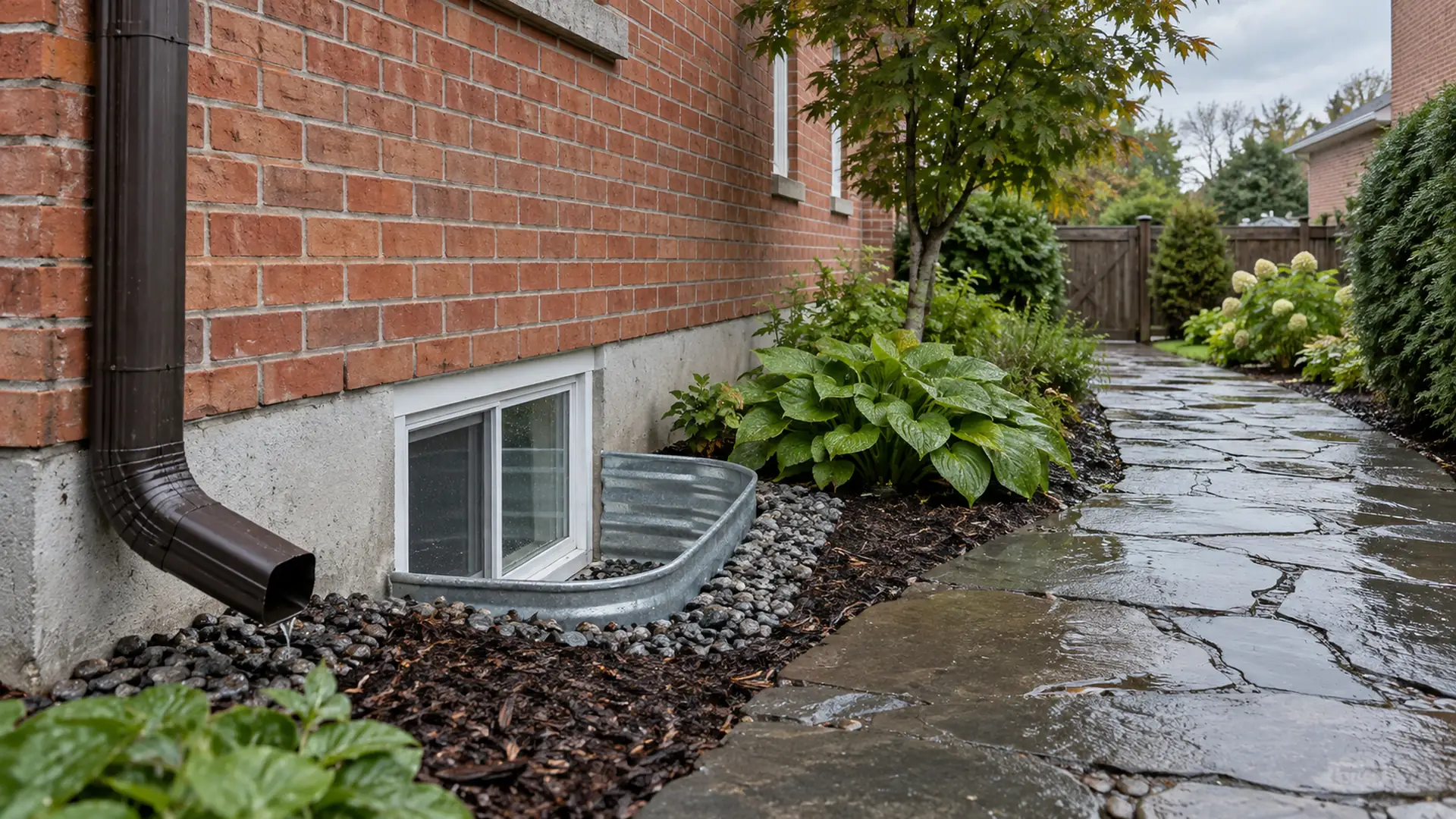
Mississauga’s stormwater and home guidance identifies downspouts, grading, window wells and drainage routes as maintenance concerns. Review those areas when an entrance, window or landscaping project changes the outside of the house.
Ask how proposed work affects the route of water across the property and whether nearby surfaces or obstructions create a concern. Major drainage changes need the appropriate assessment and approvals. A solution should not create a new problem for an adjacent property or a pedestrian route.
For a below-grade entrance or window-well project, define drainage, water protection and final surface restoration in the same scope as the opening. Treating them as optional finishing details makes the estimate incomplete.
Ask the assessor to describe the likely source, the evidence supporting it and what remains uncertain. Then ask what each proposed measure is intended to accomplish. A recommendation may involve a repair, exterior drainage work, a building-system change or a combination of measures.
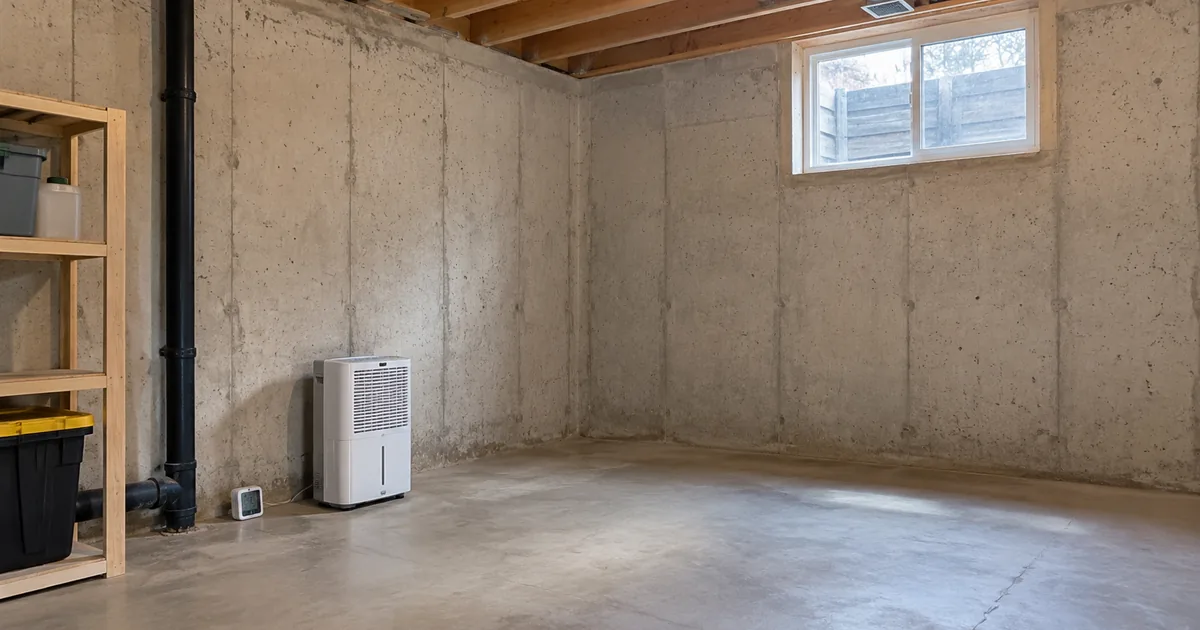
Humidity control and ventilation can be relevant to indoor conditions, but should not be presented as proof that water entry has stopped. Likewise, a new wall finish can improve appearance while hiding the area where a recurrence would first become visible. Keep the HVAC discussion connected to the moisture findings.
The City publishes separate basement flooding prevention and flood resilience programs. Their purposes, eligible measures and application conditions differ. Do not subtract an assumed rebate from your construction budget.
The flooding-prevention page requires pre-approval for measures being installed and distinguishes foundation-drain and stormwater-lateral work. It also identifies additional consultation for certain drainage arrangements and condominium communities. Verify eligibility, the relevant system, documentation and timing directly with the City before authorizing work on the assumption that it will qualify.
This website is not affiliated with those programs, and an enquiry does not establish rebate eligibility. Ask any provider to separate the technical recommendation from the funding application.
No single waiting period fits every condition or material. Have the responsible provider explain the basis for proceeding and any residual risk. Record that decision so the finishing contractor is not relying on a casual observation that the floor “looks dry.”
It may tolerate some exposure differently from other products, but it does not identify or remove the source. Resolve the condition and check the product’s installation requirements.
They are separate programs with their own criteria. Check the current City instructions and keep funding decisions separate from permit and design responsibilities.
Describe the affected area, when it occurs, previous repairs and the renovation you want to do. Share photographs only where it is safe to obtain them.
Discuss moisture before your basement renovation so investigation and corrective work can be included in the right stage.
City of Mississauga: stormwater and your home, flooding prevention rebate and flood resilience rebate. Reviewed September 17, 2026. Programs and eligibility can change.
Keep your planning moving
Turn scattered observations into a clear starting point for a moisture assessment and a better sequence for the renovation.
Read the guide: What to Record When Your Basement Feels DampCompare existing access, new openings and below-grade stairwells with the complete basement plan.
Explore the service: Separate Basement EntrancesPlan comfortable family space, an office or recreation room around existing conditions and everyday use.
Explore the service: Basement Finishing and RenovationStart with a conversation
Tell us about the space you have and the result you want. Your enquiry can be directed to an appropriate provider for a property-specific discussion.
Explore the project guide, then contact us to discuss the next step for your basement.
Explore the requirements